
Apapa & Tin Can Island
Lagos, Nigeria
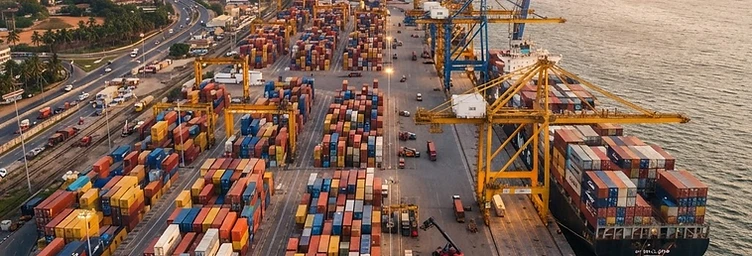
The main gateway for goods entering Nigeria. Containers move from the terminal into bonded yards, are cleared, then released to our pickup stations and hubs across the country.
Goods reach Africa by sea, and they reach you through a port. Here is where Tonnes Africa and our partners move cargo, how it is handled at each stage, and what customs asks of it before it can travel inland.
TonnesHub · ports
Every port below is a place we collect from, clear through, or plan to operate in — either directly or with a verified partner on the ground.
Apapa & Tin Can Island
Lagos, Nigeria
The main gateway for goods entering Nigeria. Containers move from the terminal into bonded yards, are cleared, then released to our pickup stations and hubs across the country.
Onne Oil & Gas Free Zone
Rivers, Nigeria
Deep berths handle the oversized and the heavy: plant, machinery and oil and gas equipment that cannot travel through a container terminal.
Port Harcourt (PHC)
Rivers, Nigeria
A river port working the Bonny channel, useful for general cargo and barge movements close to the industrial belt.
Calabar
Cross River, Nigeria
Serves the south-east corridor, with a dedicated free trade zone for cargo that lands and is cleared in the east.
Tema
Ghana
A large container terminal that moves cargo into Ghana, Burkina Faso and its neighbours along the coastal corridor.
Lomé
Togo
Natural deep water, so the biggest vessels call here and smaller ones carry the boxes onward along the West African coast.
Abidjan
Côte d'Ivoire
The main gateway for Côte d'Ivoire and the landlocked markets behind it.
Dakar
Senegal
Serves Senegal and the Sahel corridor, with a dedicated terminal next to the capital.
Mombasa
Kenya
Handles the trade of Kenya, Uganda, Rwanda and beyond through the northern corridor.
Dar es Salaam
Tanzania
Serves Tanzania, Zambia, the DRC and Malawi through the central corridor.
Djibouti
Djibouti
A deep-water port that carries almost all of Ethiopia's import and export trade.
Durban
South Africa
The busiest container port in Africa, moving goods inland across the region.
Tangier Med
Morocco
Where container services between Asia, Europe and Africa interchange before the final crossing.
Rotterdam, Antwerp & Hamburg
Europe
Goods bought from European suppliers are consolidated here before the African leg.
Shanghai, Ningbo & Port Klang
Asia
The main loading ports for manufactured goods, machinery and electronics headed to Africa.
Jebel Ali
United Arab Emirates
A consolidation hub for cargo from Asia and the Gulf before it sails for an African port.
Routes connecting ports, cities, warehouses and markets.
Lagos–Abidjan Corridor
West Africa's busiest coastal trade route.
Lagos–Kano Corridor
Imports inland and farm produce to the coast.
Onne–Aba–Enugu Corridor
Energy and manufacturing cargo for the south-east.
Tema–Ouagadougou Corridor
Gateway for landlocked Sahel markets.
What happens to cargo between the vessel and the customer.
Sealed from end to end
Containers leave the terminal sealed and are checked again at the yard. A broken seal stops the movement and the shipment is inspected before anything else happens.
One record per shipment
Every container is logged against its Bill of Lading, clearing agent, duty payment and release note, so the same shipment can be followed from the vessel to the shelf.
Yards that are watched
Bonded yards and our own hubs are gated, access-controlled and covered, with entries and exits recorded while cargo sits between the port and the customer.
Verified partners only
Clearing agents, hauliers and terminal partners are KYC-verified before they touch a shipment, and payments are released against delivery rather than promises.
The rules a shipment meets on arrival, and updates we watch for.
Documents before the vessel
Form M, the proforma invoice and the Bill of Lading are lodged before cargo arrives, so assessment starts while the container is still at sea.
Assessment and duty
Duty is assessed on the declared value and the HS code of the goods. A wrong code or an under-declared value holds the container and adds demurrage for every day it waits.
Release, then movement
Nothing leaves the port without a release note. From there the container is either emptied into our hubs or moved on to the customer.
Regulations change, we track them
Tariff bands, import prohibitions, product certification and port procedures are updated regularly. We confirm the current requirement for a shipment before it sails, not after it lands.
This is an overview of how cargo moves, not a substitute for the current regulation of the country a shipment enters. We confirm the requirement for each shipment before it sails.
Shipping into Africa, or clearing a container right now?
Talk to our teamWe use cookies to keep the platform secure, remember your preferences and understand how it's used. See our Cookie Policy.
